
388 9th St., Ste 157
Oakland, CA 94607

Signs You Might Have Astigmatism and Should See an Eye Doctor

“I can see well enough, so I probably don’t need an eye exam.”
“Blurry vision is normal - I just need to rest my eyes.”
“I passed a vision screening, so everything must be fine.”
These are all things we hear every day at Eye See Vision Center. However, seeing “well enough” doesn’t always mean your eyes are functioning at their best. One common condition that often goes undiagnosed because symptoms are subtle or misunderstood is astigmatism. A comprehensive eye examination is the only way to accurately detect it and determine whether treatment is needed.
Astigmatism is a common refractive error caused by an irregularly shaped cornea or lens. Instead of being perfectly round, the eye is shaped more like a football, which prevents light from focusing evenly on the retina. This can result in distorted or blurred vision at both near and far distances.
Astigmatism can occur on its own or alongside nearsightedness or farsightedness, and it can affect both children and adults. Many people have some degree of astigmatism without realizing it.
Astigmatism doesn’t always present as obvious blurry vision. In many cases, the symptoms are gradual or mistaken for everyday eye strain. Signs to watch for include:
• Blurred or distorted vision at any distance
• Difficulty seeing clearly at night, especially while driving
• Frequent squinting to focus
• Headaches, particularly after reading or screen use
• Eye strain or fatigue
• Trouble focusing on fine details
• Words appearing shadowed or doubled
Children may not realize their vision is different from normal, so symptoms can show up as avoidance of reading, trouble concentrating, or complaints of headaches rather than vision problems.
School screenings or basic vision checks typically measure how well you can read an eye chart. While helpful, they do not diagnose astigmatism or evaluate how your eyes work together. Astigmatism requires precise measurements of how light enters and focuses inside the eye - something only a comprehensive eye examination can provide.
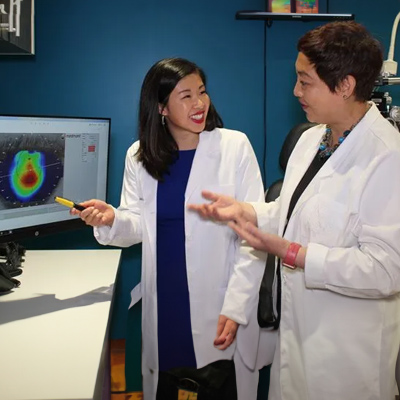
During a comprehensive eye exam, your eye doctor evaluates much more than visual clarity. Testing includes eye focusing ability, eye muscle coordination, and detailed measurements of your cornea and lens. A refraction is performed to determine whether glasses or contact lenses are needed and what prescription provides the clearest, most comfortable vision. Advanced diagnostic tools allow your doctor to detect even mild astigmatism and determine how it impacts your daily visual performance.
If you’re noticing signs of astigmatism, schedule a comprehensive eye examination at Eye See Vision Center to learn about personalized treatment options. Visit our office in Oakland, Fremont, or Pleasanton, California. Please call (510) 268-9600, (510) 796-9600, or (925) 462-1100 today.





Oakland
(510) 268-1608
- Monday 9:30am - 5:30pm
- Tuesday 9:30am - 5:30pm
- Wednesday 9:30am - 5:30pm
- Thursday 9:30am - 5:30pm
- Friday 9:30am - 5:30pm
- Saturday 9:30am - 5:30pm
- Sunday Closed
Fremont
(510) 796-9600
(510) 796-9691
- Monday Closed
- Tuesday 10:00am - 6:00pm
- Wednesday 10:00am - 6:00pm
- Thursday 10:00am - 6:00pm
- Friday 10:00am - 6:00pm
- Saturday 10:00am - 6:00pm
- Sunday Closed
Pleasanton
(925) 462-6600
- Monday 10:00am - 5:30pm
- Tuesday 10:00am - 5:30pm
- Wednesday 10:00am - 5:30pm
- Thursday 10:00am - 5:30pm
- Friday 10:00am - 5:30pm
- Saturday 10:00am - 5:30pm
- Sunday Closed
© 2026 East Bay Vision Center Optometry, Inc. All rights Reserved - Accessibility Statement - Privacy Policy - Sitemap
Powered by
